
In a world full of mass-produced kitchenware, there’s something undeniably special about owning a piece crafted by hand—slowly, carefully, and intentionally. Hardwood cutting boards and end-grain butcher blocks sit at the crossroads of practicality and artistry, offering both exceptional durability and the kind of beauty that elevates even the simplest kitchen space.
This blog explores what makes high-end hardwood boards so sought after, why the choice of wood matters, and how a single craftsperson in the UK can turn Walnut, Maple, Cherry, Beech, and Sapele into heirloom-quality kitchen centrepieces.
A cutting board might seem like an everyday tool—but to cooks, chefs, and anyone who appreciates fine craftsmanship, it’s much more. High-end hardwood boards are made not simply to perform well, but to last, to age gracefully, and to bring pleasure every time you prepare a meal.
Handmade boards offer qualities that factory-produced items simply cannot match:
Superior durability from dense hardwoods
Knife-friendly surfaces that keep blades sharper for longer
Unique, one-of-a-kind grain patterns impossible to replicate at scale
Sustainable craftsmanship, often using responsibly sourced timber
Fine finishing that feels silky under the hand
But there’s one factor that sets luxury cutting boards apart more than anything else: careful selection of hardwoods paired with meticulous construction techniques, especially when it comes to end-grain butcher blocks.
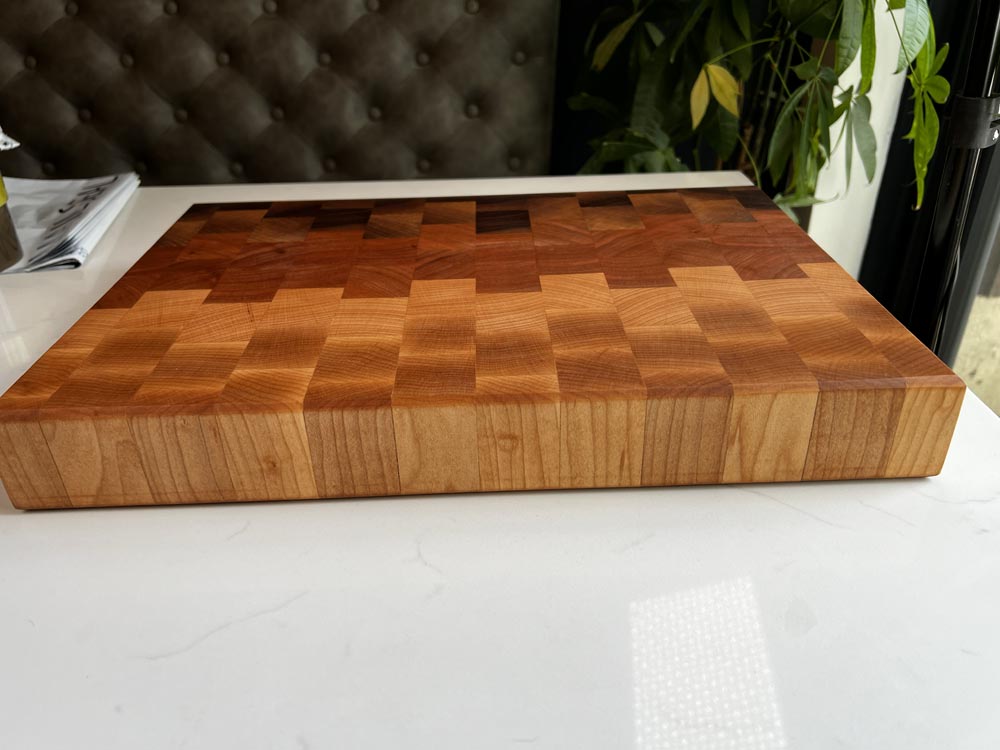
To understand why certain boards command a premium price, it helps to know how they’re built.
In long-grain boards, the side of the wood grain forms the cutting surface. They’re durable, attractive, and easier to produce than end-grain boards, making them a popular mid-range choice.
End-grain boards are the pinnacle of craftsmanship. Here, the ends of the wood fibres—the strongest and most resilient part of the timber—face upward, forming a surface similar to a bundle of upright straws.
This structure means:
Knife edges sink slightly into the fibres rather than crushing them.
The surface “self-heals” as fibres spring back into place.
The board is significantly more durable and resistant to wear.
Creating an end-grain board requires extensive planning, precise joinery, multiple glue-ups, and meticulous finishing—often taking many hours or even days for a single piece. The result is a luxurious, heavy, solid board that both professional chefs and home cooks cherish.
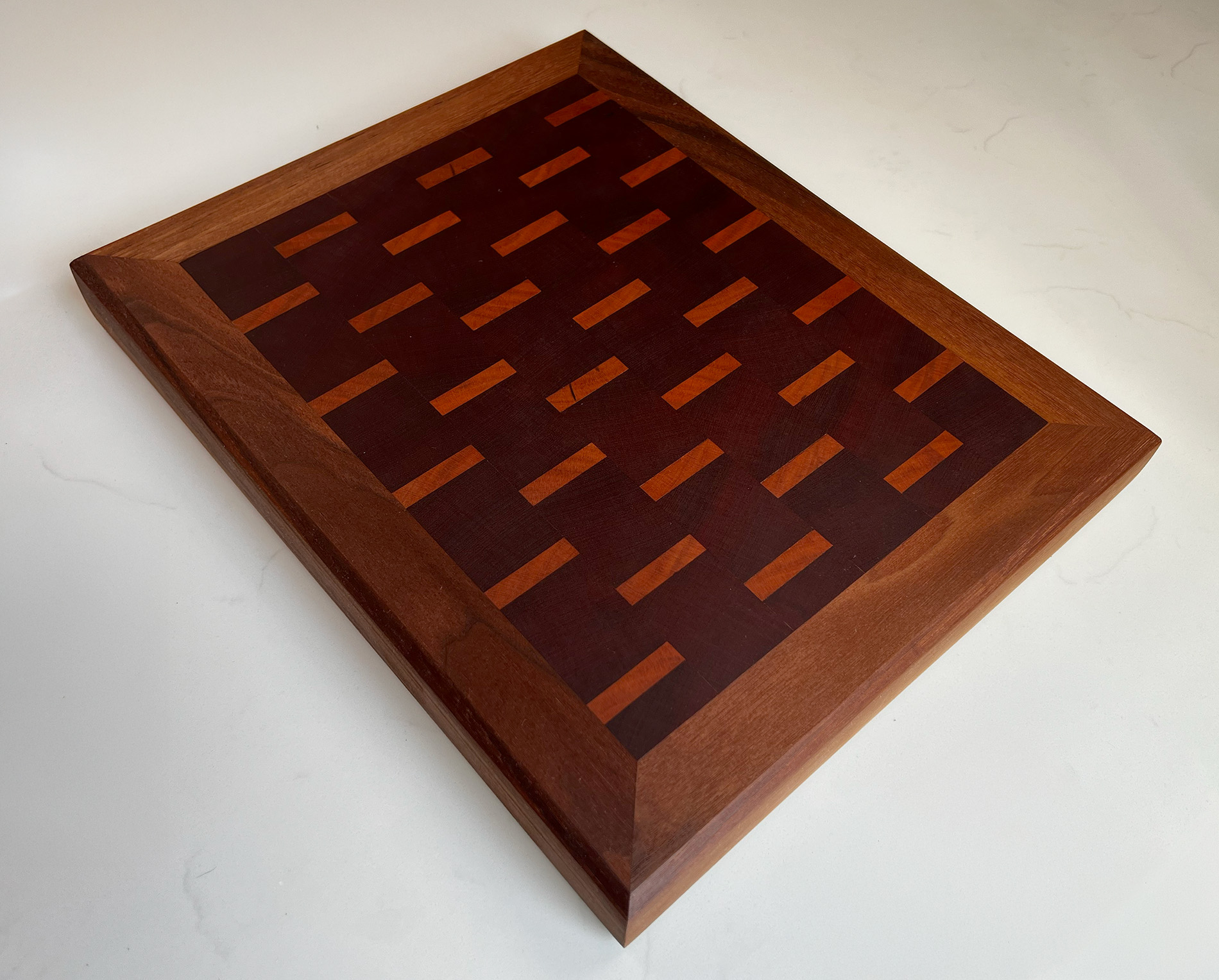
In an era dominated by automated machinery and overseas production, owning a handmade board crafted by a single artisan in the UK offers a different kind of value. It means:
Each board is created start to finish by one person—every cut, glue joint, clamp, plane, and sanding pass.
Quality control is personal, not procedural.
Grain matching, colour harmony, and design decisions are made by an experienced eye, not a production schedule.
Sourcing wood, shaping, oiling, and finishing—all carried out with intention and skill.
This level of craftsmanship cannot be rushed, and it brings an authenticity customers increasingly seek: the knowledge that what they’re buying is not just a kitchen tool, but a piece of fine craftsmanship.
Each species has its own character—its colour, hardness, workability, and unique charm. Below is a closer look at the hardwoods commonly used in premium boards.
Often considered the most premium of cutting board timbers, Walnut is a favourite for those who want depth, richness, and a sophisticated aesthetic.
Deep chocolate browns with purples, greys, and caramel streaks
Medium hardness—strong yet gentle on knives
Smooth texture and refined grain that finishes beautifully
Walnut’s combination of durability and knife-friendliness makes it one of the best woods for everyday chopping. It absorbs less moisture than lighter woods, and its darker tone helps conceal stains and marks.
Walnut tends to sit at the higher end—roughly £45–£65 per square foot of usable board area, depending on thickness and grade.
Buyers who value luxury, warmth, and timeless elegance.
For chefs, Maple is the gold standard—especially in North America where it’s abundant. In the UK it’s more expensive due to import costs, adding to its premium status.
Pale cream to light honey tones
Tight, subtle grain with minimal figure
Very hard and highly scratch-resistant
Maple’s hardness gives it exceptional longevity. Its tight grain structure prevents moisture absorption and bacterial growth, making it one of the most hygienic hardwoods available. It also develops a beautiful patina with use.
Typically £35–£50 per square foot. End-grain Maple sits at the upper end due to the labour involved.
Minimalists and serious cooks who want a clean, professional-looking board.
Cherry is one of the most underrated woods for cutting boards, especially in end-grain form.
Warm red and amber tones that deepen with age
Fine, smooth grain with soft figure
Medium hardness—easy to work, gentle on knives
Cherry’s surface is naturally smooth and becomes even more beautiful as it matures. It’s easier on blade edges than very hard woods, making it an excellent everyday chopping surface.
Usually £30–£45 per square foot, making it a slightly more affordable but still premium option.
Those who appreciate warm, natural aesthetics and boards that age gracefully.
Beech has long been used across Europe for butcher blocks and worktops. Though sometimes overlooked as “common,” high-quality Beech boards can be exceptionally durable.
Pale pinkish-tan to warm beige
Very tight grain, uniform and consistent
Hard and dense with excellent wear resistance
Beech is reliable and stable, making it ideal for large butcher blocks. It takes finish well and resists warping when properly dried and cared for.
More affordable at £20–£35 per square foot, depending on thickness and grade.
Buyers who want premium craftsmanship without the highest-end price tag.
Sapele is a rich African hardwood known for its deep, shimmering grain and exceptional durability.
Reddish-brown with chatoyance (a silky, light-reflecting effect)
Dense and very hard
Often displays ribbon stripe or interlocking grain
Sapele makes extraordinarily striking boards. Its hardness makes it extremely durable, though it requires sharp tools and skill to work—one reason it’s less commonly used in mass-produced boards.
Typically £35–£55 per square foot depending on thickness and figure.
Those who want a statement piece—a board that is as decorative as it is functional.
Premium hardwood alone doesn’t make a premium board—construction does. End-grain butcher blocks represent the highest level of woodworking skill.
Why buyers are willing to pay significantly more:
The wood fibres separate under the blade and close again afterwards. This reduces dulling and extends the life of expensive knives.
End-grain surfaces resist deep gouges, splitting, and general wear better than long-grain boards.
Over time, many small marks simply vanish as the fibres rebound.
End-grain boards often require:
Multiple milling and glue-up stages
Complex pattern layout
Perfect joint alignment
Several rounds of sanding and finishing
A single mistake can ruin the entire board—requiring hours of precision.
These boards are substantial. They feel like a piece of solid furniture, not a kitchen accessory.
Checkerboard patterns, parquet designs, and contrasting species create stunning functional art.
High-end customers appreciate the difference—not just in performance, but in aesthetics and the tactile joy of using a board that feels like an heirloom.
The buyers most drawn to premium hardwood boards are not just looking for a surface to cut on. They’re looking for:
Authenticity
Sustainability
Uncompromising quality
Products built to last decades, not years
A handmade board crafted by a single UK artisan offers what factory-made products cannot:
Every board has a traceable origin—the craftsperson’s workshop, their tools, their time.
No two boards have identical grain patterns. Each one is a functional work of art.
Luxury buyers appreciate objects that reflect good taste, skill, and longevity.
A craftsperson can give boards the attention they deserve: hand-rounded edges, satin-smooth surfaces, beautifully matched grain.
Small makers often source wood sustainably and treat every piece with respect.
High-quality hardwood boards often cost more than mass-produced options—and rightly so. The price reflects far more than materials:
Hours of labour and expert craftsmanship
Premium woods priced per square foot
Multiple finishing stages
Specialised tools and workshop overheads
Waste reduction, grain matching, and precision cutting
Instead of £20–£40 factory boards, a premium handmade board may cost £120–£350 or more depending on size, species, and end-grain construction. But unlike cheaper alternatives, these boards last for years—often decades—with proper care.
For many buyers, that longevity is the value.
A handmade hardwood cutting board or end-grain butcher block is more than a kitchen tool—it’s a piece of craftsmanship that brings joy, beauty, and function into your daily life. Whether made from the rich darkness of Walnut, the creamy durability of Maple, the warmth of Cherry, the reliability of Beech, or the stunning depth of Sapele, a premium board elevates every meal you prepare.
For customers who appreciate quality and don’t mind paying more for something truly exceptional, these boards represent the perfect blend of tradition, artistry, and utilitarian excellence.
If you’re looking for a board that will age with you, serve you well, and look beautiful doing it, a handmade UK-crafted hardwood board is a luxury worth investing in.